
Kumbhalgarh is an easy day’s ride from Jaipur on tarmac. This wasn’t that ride. The idea was to string together two mountain sections back to back — Goram Ghat, a dirt trail that crosses the old metre-gauge railway through the Aravallis, and Desuri ki Naal, the walled ghat cut that climbs onto the Kumbhalgarh plateau — and only arrive at the fort once both were done. It was just the two of us, Arvind and me — 25 years of friendship, plenty of trips together over the years, but somehow never one on two wheels until this. New riding gear just for the occasion, and we were off.
Down to Kachhbali
Arvind and I geared up and rolled out of Jaipur at 5:00 AM. Early enough that traffic was a non-issue, and riding in the rains meant mesmerising views the whole way down — the kind where you're on an empty road, mountains off to the side catching rain, and a stray sprinkle drifts over onto you. The road as far as Ajmer was easy going. Past Kishangarh, on the right, the Pushkar hills came into view — lush and green from the monsoon, dark clouds sitting on top, catching the rain as it fell. Further on, rain had flooded the roadside stretches, and birds worked the puddles. Crossing Beawar is where the hilly country properly starts, and about 50 km in — around 8:00–8:30 AM — we pulled off the road for breakfast: a restaurant with big banyan trees out front, hills rising green on both sides behind it. We ate aloo parathas and spent a good half-hour talking with the owner about the road ahead — specifically how to get into Goram Ghat. There's a route around the right of the Aravallis too, further out toward Sojat Road and on to Ranakpur, but on his advice we went in from the left, through smaller village roads — we'd end up at Ranakpur anyway, as a side trip from Kumbhalgarh on the way back. NH48 as far as Ajmer, then NH58 to Sangawas, then a left onto the smaller road into Kachhbali — 271 km to the trailhead. Fuel up before the trailhead; there is nothing on the trail itself.
Goram Ghat: Kachhbali to Phulad
The entrance to Goram Ghat is a forest department checkpoint, where we paid the entry fee for both of us and the bikes. Past the gate the road drops straight into dense jungle: rolling hills, waterfalls, and the old railway line, which the trail crosses. Nobody has really built a road through here — it’s off-roading, bumpy and full of switchbacks, first-gear work through water crossings and rough ground. A little way in, where a check dam holds back a big pond, we stopped to take photos, jungle pressed in dense on both sides. Then the trail reaches the railway bridge the special train between Phulad and Goram Ghat runs over — there’s a shelter here for people visiting the ghat by train. We walked out onto the bridge itself: mesmerising views, a light sprinkle of rain, fresh air.
Past the bridge we forded two more small rivers, and at one — still water, not flowing, thick with fish — we stopped properly: stripped off the heavy riding gear, waded in, and sat there for close to an hour. Fish nosing up against our legs, tickling more than anything. Goram Ghat station itself is one of the remoter halts on the line — a platform, a tea stall, monkeys, not much else. Almost no traffic on the trail, which is the whole point — just the line, the hills and the water.
- Kachhbali–Phulad trail distance: 14.2 km. We took about 3 hours, including stops.
- Water crossings: 2, flowing water, roughly 1–3 feet deep at the deepest.
- Forest department entry fee: ₹80 per person, ₹150 per bike.
- No punctures. Arvind's bike skidded on one of the turns — no one hurt.
Phulad to Kumbhalgarh: Desuri ki Naal
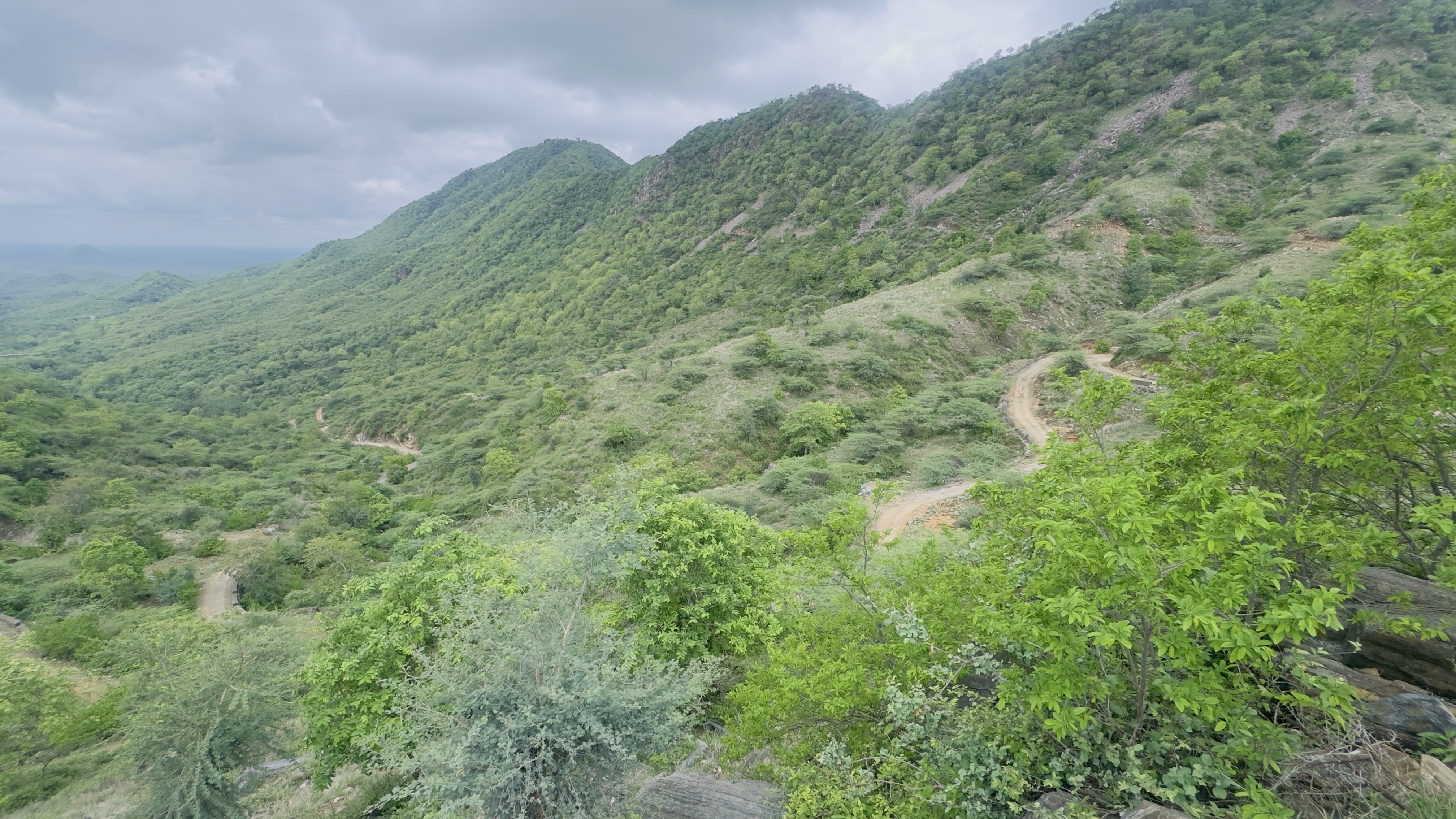
We packed up from the pond and rode on through Phulad, crossing from one side of the Aravallis to the other — Phulad itself sits on the far side, the range to the left of the road from there, open farmland and villages to the right. Roads were good until the last stretch: the 10–kilometre run into Desuri ki Naal was rough and tiring, loose and slow going. We stopped for lunch there — a small place, nothing fancy, but the food was good — before climbing on. The uphill mountain riding out of Desuri ki Naal, with Kumbhalgarh sitting up at height, made up for the rough approach: smooth tarmac, a good steady climb, not many switchbacks. We paused at a scenic lake along the way for photos and stopped for tea before rolling into Kumbhalgarh.
Kumbhalgarh: first night
We rolled in around 5:00 PM and found a hotel for the night — ₹2,000, with a balcony looking straight out over the jungle. Arvind and I skipped the fort’s evening light-and-sound show and spent most of the evening out on the balcony instead, just listening to music.
Day two: the fort, and a temple in the trees
Breakfast, then the fort itself — the Kumbhalgarh Fort whose perimeter wall is the headline here, kilometres of unbroken rampart along the ridge, which is why people call it the “Great Wall of India.” We covered most of it. From up on the walls, looking down, we spotted an old Jain temple in the jungle below — the Bawan Devri Jain Temple, deserted and locked, and so isolated that few people can visit it. Curious enough to chase it down, we trekked about a kilometre through the forest to reach it, had a look around, and walked back. Standing inside an empty temple like that does something to your head — you start wondering who built it, who used to be there, how it ended up abandoned. I’m still curious about it, honestly; I haven’t had the chance to dig into the history yet.
Ranakpur
Back on the bikes from the temple and out toward Ranakpur. Ten, fifteen kilometres out of Kumbhalgarh the road starts dropping, and it's watery again down there — streams and crossings, not unlike Goram Ghat the day before. Ranakpur itself has an old, well-kept fort, and right by it the Chaturmukha Dharna Vihara (better known as the Ranakpur Jain Temple) — easily the most striking thing either of us had seen on the trip. We had lunch there before heading back.
The ride home, the long way
It started raining hard on the way back. There was a flat, direct road out of Ranakpur toward Jaipur, but we wanted one more mountain ride out of the trip, so we doubled back over Desuri ki Naal instead — waterfalls on the left this time, a few temples along the road too. We reached the junction at Gomti Ka Chauraha, turned left, and settled into the straight run back to Jaipur, stopping along the way for water and tea. We rolled in home around 5:00 PM.
The run
- Jaipur → Kachhbali
- 271 km · NH48 to Ajmer, NH58 to Sangawas, then left to Kachhbali · breakfast ~50 km in
- Kachhbali → Phulad (Goram Ghat trail)
- 14.2 km · ~3 hrs incl. stops
- Phulad → Kumbhalgarh (Desuri ki Naal)
- 94 km · ~10 km rough & uphill near the Naal · lunch stop at the Naal
- Kumbhalgarh → Ranakpur
- 33.4 km · lunch at Ranakpur
- Ranakpur → Jaipur (back over Desuri ki Naal)
- 357 km · via Gomti Ka Chauraha · home ~5:00 PM
- Total
- 769.6 km
- Surface
- Tarmac to Kachhbali; dirt, rock & water crossings to Phulad; paved ghat to Kumbhalgarh and on to Ranakpur
- Stay
- Kumbhalgarh, arrived ~5:00 PM
- Budget
- ₹4,000–4,500 per person — double occupancy, incl. fuel and food
- Duration
- 2 days, 1 night
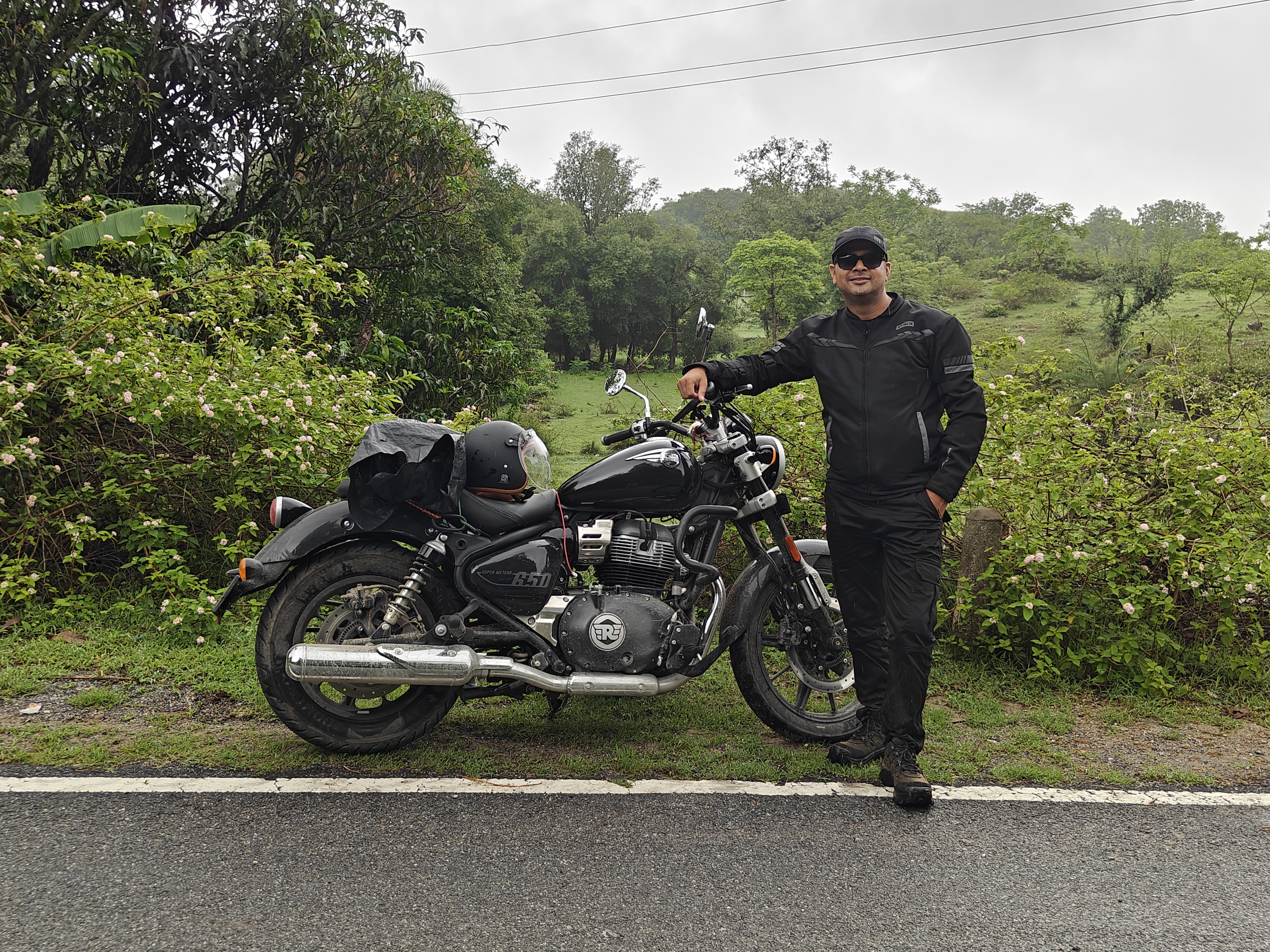
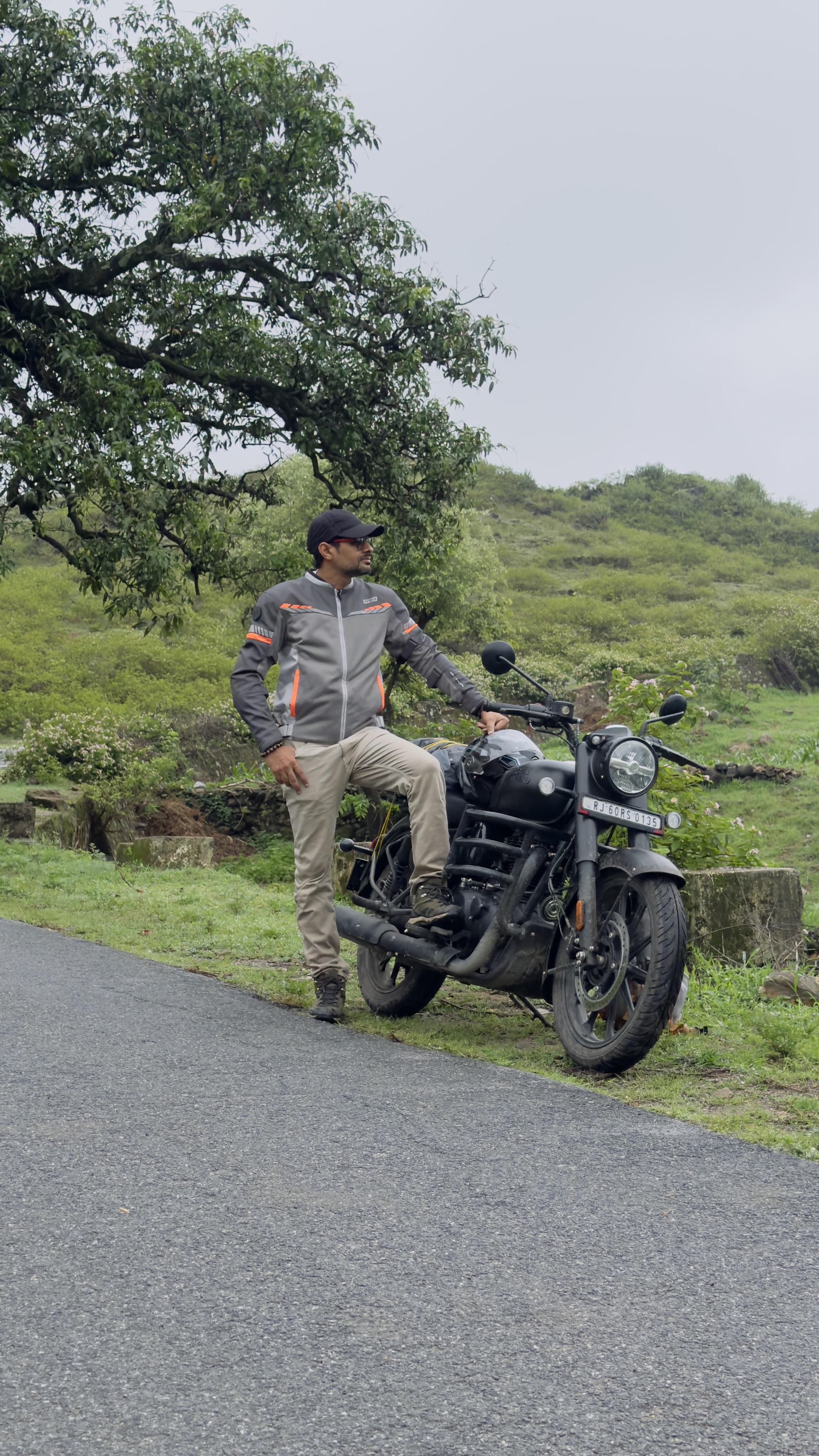
Goram Ghat is a dirt trail that crosses a working railway line, with water crossings after rain. Ride it in daylight, in company, on at least dual-purpose tyres, and stay off the trackbed — the line is quiet but not closed. Fuel and water before Kachhbali; there is nothing until Phulad. There's a forest department entry fee at the Goram Ghat gate, for both riders and bikes — carry cash. Check whether the trail is passable if you’re going soon after heavy rain.